Views: 15 Author: Site Editor Publish Time: 2026-07-03 Origin: Site
Foam netting has quietly become one of the most practical packaging materials in global supply chains. Growers, packers, exporters, and logistics companies rely on it daily—yet it rarely gets the attention it deserves. A bruised mango or a cracked bottle of wine might seem like a minor inconvenience, but at scale, product damage during transit translates into real losses.
Single layer foam nets offer a direct solution. Lightweight, soft, and endlessly adaptable, these sleeves wrap around individual items to absorb shock, prevent surface abrasion, and keep products looking their best by the time they reach the end customer. For fresh produce in particular, the difference between arriving in pristine condition and arriving damaged often comes down to one simple layer of foam.
China has emerged as the dominant global source for foam netting—particularly single layer foam nets—combining manufacturing scale with competitive pricing. Manufacturers like Fly Packing Co., Limited , based in Kaiping City, Guangdong, have supplied these products to international markets since 2002.
This guide covers everything you need to know: what foam netting is, how single layer foam nets work, and why sourcing from China makes sense for businesses that need quality packaging at volume.

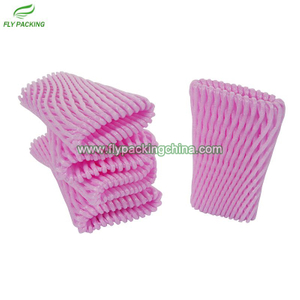
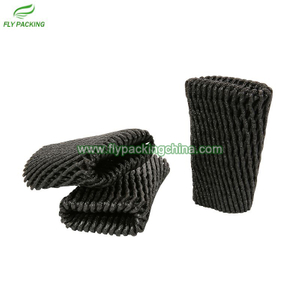
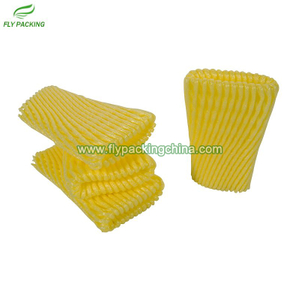
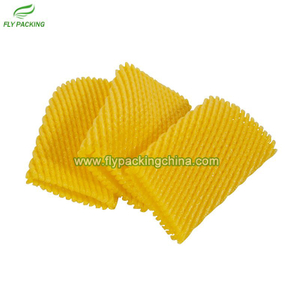
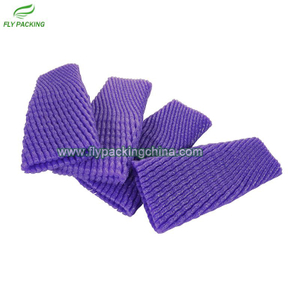
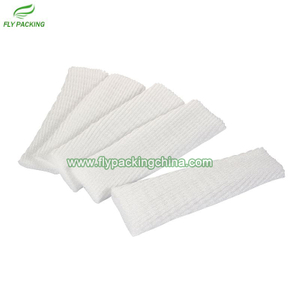
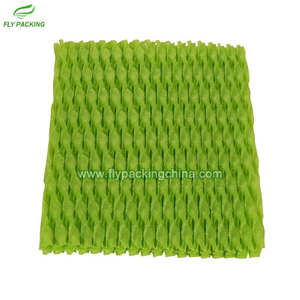
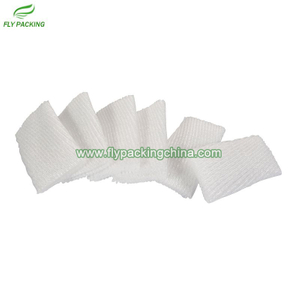
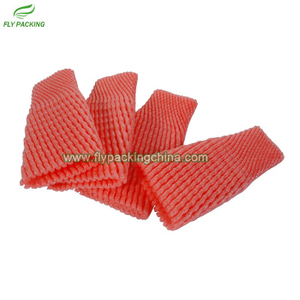
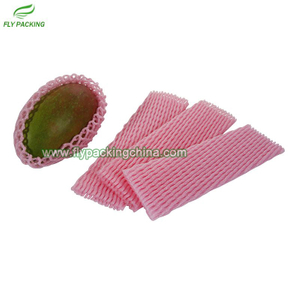
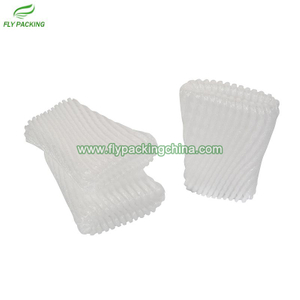
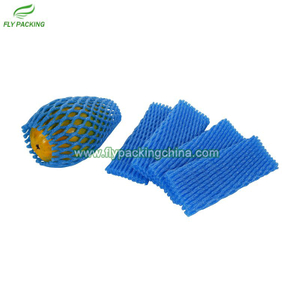
Foam netting is a tubular mesh sleeve made from expanded polyethylene (EPE) foam. The material is extruded into a net-like structure, creating a flexible, open-weave sleeve that stretches to accommodate a wide range of product sizes. When slipped over an item, the foam net conforms to the surface, creating a uniform cushioning layer that distributes pressure evenly.
The core function is simple: prevent items from knocking against each other or hard surfaces. Fruits and vegetables are particularly vulnerable to bruising. A single impact during transport can cause internal damage that isn't visible at the point of sale but accelerates spoilage. Foam nets act as a buffer, absorbing that energy before it reaches the product.
Beyond produce, foam netting protects glassware, ceramics, bottles, electronics components, and other fragile goods. The same physical properties apply—soft, shock-absorbing foam that grips the surface without scratching it.
A single layer foam net consists of one continuous layer of extruded EPE foam formed into a net sleeve. This distinguishes it from double-layer foam nets, which stack two foam layers for heavier or more fragile items.
Single layer foam nets are the most common choice for everyday fruit and vegetable packaging. They are:
Lightweight — Adding minimal weight to shipments keeps freight costs down
Flexible — One size can accommodate a range of product dimensions
Non-toxic — Food-safe materials make them suitable for direct contact with fresh produce
Recyclable — EPE foam is environmentally friendly and widely recyclable
Cost-effective — Simple construction keeps unit costs low even at high volumes
Single layer foam nets are used across a broad range of industries. The table below outlines the most common applications:
Application | Product Examples | Key Benefit |
|---|---|---|
Fresh fruit packaging | Apples, pears, mangoes, avocados | Prevents bruising and surface abrasion |
Vegetable packaging | Tomatoes, peppers, cucumbers | Cushions delicate skin during transit |
Glass and bottle protection | Wine bottles, glassware | Absorbs impact, prevents breakage |
Ceramic and pottery | Cups, vases, decorative items | Lightweight scratch prevention |
Electronics components | Small parts, screens | Non-static surface protection |
Export packaging | Mixed produce and goods | Standardized protection at volume |
For fresh produce exporters, single layer foam nets are a near-universal choice. They can be applied quickly by hand on packing lines, require no tools or adhesives, and add negligible weight to the overall shipment.
China's manufacturing infrastructure for foam packaging is extensive, well-established, and export-ready. For buyers looking to source single layer foam nets at volume, Chinese manufacturers offer a combination of advantages that are difficult to match elsewhere.
Chinese foam net manufacturers produce a wide range of sizes, colors, densities, and formats—from individual pre-cut sleeves to continuous foam net rolls. This variety allows buyers to specify exactly what they need, whether that's a small-diameter sleeve for table grapes or a larger format for grapefruit.
Fly Packing Co., Limited, for example, produces single layer foam nets alongside double layer options, foam net rolls, foam sheets, foam cushions, and uncut foam mesh—all from a single facility in Guangdong Province. Buyers can consolidate orders, simplify logistics, and access a full range of protective packaging from one supplier.
Reputable Chinese foam net manufacturers hold relevant certifications and maintain quality control processes aligned with international export standards. When evaluating a supplier, look for documented certifications, clear product specifications, and a track record of supplying markets in North America, Europe, and Australia—regions with strict import quality requirements.
Working with a Chinese Single Layer foam net supplier requires attention to a few practical details:
Minimum order quantities — Most manufacturers set MOQs by weight or carton count; confirm these before requesting samples
Lead times — Standard production and shipping from Guangdong typically runs four to six weeks for sea freight
Sample availability — Established manufacturers like Fly Packing offer free samples, allowing buyers to test fit and quality before committing to a full order
Communication — Prioritize suppliers who respond to inquiries in English within 24 hours; faster response times generally reflect stronger export experience
Single layer foam nets solve a real problem efficiently. Produce arrives intact. Bottles reach customers unbroken. Ceramics survive the journey. The material is inexpensive, food-safe, lightweight, and available at virtually any volume.
For businesses sourcing foam netting at scale, China remains the most practical origin—particularly manufacturers in Guangdong Province with dedicated export operations. Fly Packing Co., Limited (flypackingchina.com) has supplied foam nets to international markets since 2002, offering single layer foam nets, double layer options, and foam net rolls with free samples and English-language support.
The right foam net reduces damage, reduces waste, and protects the value of what you've worked hard to grow, produce, or manufacture. Sourcing from an experienced Chinese manufacturer makes that protection accessible and affordable at any scale.
A single layer foam net uses one layer of EPE foam in its net structure, making it lighter and more suited to everyday fruit and vegetable packaging. A double layer foam net uses two layers of foam, providing greater cushioning for heavier or more fragile items such as exotic fruits or dense produce. Single layer nets are the more common and cost-effective choice for standard packaging applications.
Single layer foam nets are available in a wide range of diameters and lengths to suit different product sizes. Common options range from small sleeves for table grapes and cherry tomatoes to larger formats for citrus fruit, mangoes, and avocados. Chinese manufacturers like Fly Packing Co., Limited also offer customization by size, color, and foam density based on order volume.
Yes. Single layer foam nets made from expanded polyethylene (EPE) are non-toxic, odorless, and food-safe. EPE foam does not contain harmful chemicals and is widely used for direct contact with fresh produce in export packaging.
Single layer foam nets are applied by hand. The packer stretches the open end of the net sleeve and slides it over the fruit or item, allowing the foam to grip and conform to the product's surface. No tools, adhesives, or heat are required. The process is fast enough for use on high-volume commercial packing lines.
Minimum order quantities vary by manufacturer and product specification. Most Chinese foam net suppliers set MOQs by carton count or total weight. Contacting the manufacturer directly and requesting free samples before placing a bulk order is the standard approach for new buyers.
Quick answer: Foam netting is a lightweight, flexible protective sleeve made from expanded polyethylene foam. Single layer foam nets are the most widely used format, offering reliable cushioning for fruits, vegetables, and fragile goods during storage and transit. China is a leading manufacturer of single layer foam nets, supplying global markets with cost-effective, high-quality options.

| | 1/F, NO.81, CHANGZHEN ROAD, SHUIKOU TOWN, KAIPING CITY, GUANGDONG, CHINA |
| | +86-0-136 3183 6942 / +86-0-134 2677 9895 +86-750-2280358 |
| |