Views: 8 Author: Site Editor Publish Time: 2026-09-08 Origin: Site
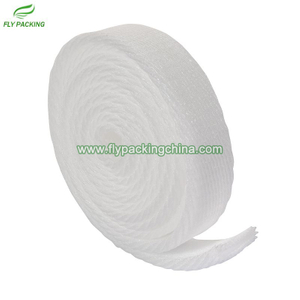
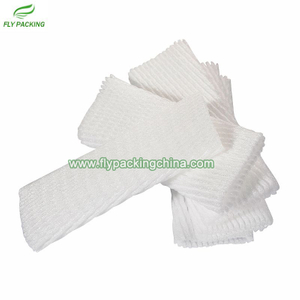
Foam nets protect fresh produce from bruising, scratching, and impact damage during transit. Single-layer options suit lighter fruits, while double-layer designs add extra cushioning for heavier or more delicate produce. Sourcing from a specialized manufacturer ensures consistent quality, reliable sizing, and supply chain dependability.
Fresh fruit is surprisingly vulnerable. A mango that survives months of growing can arrive at market bruised and unsellable after just a few hours of road transport. An apple, a pear, a dragon fruit—any of them can be marked, cracked, or softened by friction and pressure before a single customer sees them. The gap between a profitable shipment and a rejected one often comes down to packaging.
Foam net sleeves close that gap. Lightweight, flexible, and inexpensive relative to the losses they prevent, they've become a standard protection layer across fruit export operations worldwide. This guide covers the types available, their practical differences, and the key factors to consider when selecting a supplier.

Transit damage to fresh produce is rarely dramatic. It's not a forklift accident or a collapsed pallet—it's vibration over several hundred miles. It's two pieces of fruit pressing against each other through a cardboard box. It's the surface abrasion that happens when a crate shifts during loading.
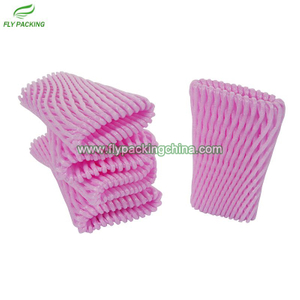
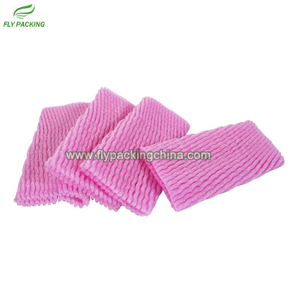
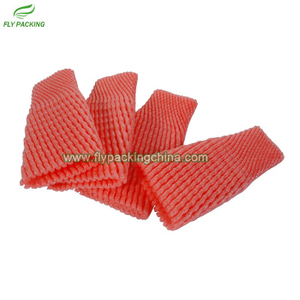
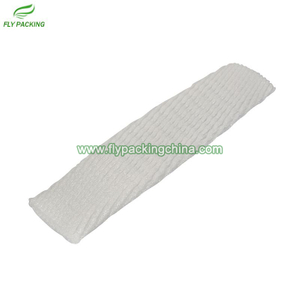
Foam net sleeves work by creating a soft, elastic buffer around each piece of fruit. The net conforms to irregular shapes, absorbs impact, and prevents direct contact between items. The result is less surface bruising, fewer rejections, and better presentation at the point of sale.
The material used is typically polyethylene (PE) foam—lightweight, non-toxic, moisture-resistant, and food-safe. It doesn't compress permanently under normal shipping loads, which means it keeps protecting throughout the journey rather than flattening out within the first hour.
Not all fruit requires the same level of protection. A firm apple and a ripe avocado have very different packaging needs. That's where the distinction between single and double-layer products matters.
Feature | Single-Layer Foam Net | Double layers foam net |
|---|---|---|
Thickness | Thinner, lighter | Thicker, more cushioning |
Best suited for | Firm fruits (apples, citrus) | Delicate or high-value fruits |
Shock absorption | Standard | Enhanced |
Weight added | Minimal | Slightly more |
Cost | Lower per unit | Higher per unit |
Typical use case | Domestic and short-haul transport | Long-distance or export shipping |
Single-layer nets handle everyday protection well. They're cost-efficient and suitable for produce that's structurally firm and not prone to surface marking.
As a trusted double layers foam net manufacturer, we recommend this option because, by contrast, it wraps the fruit in two overlapping layers of PE foam. The added thickness increases cushioning significantly—making it the right choice for mangoes, dragon fruit, pears, kiwis, and other fruits where appearance at delivery directly affects market value. For exporters shipping across long distances or through multiple handling points, the extra protection is usually worth the marginal cost difference.
The quality of foam netting varies considerably between suppliers. Inconsistent mesh tension, non-uniform sizing, or low-density foam can all reduce effectiveness—and that inconsistency becomes a problem at scale.
Several factors are worth evaluating before committing to a supplier:
Material quality. PE foam should be food-safe, odor-free, and consistent in density. Ask about material certifications, particularly if exporting to regulated markets.
Size range. Fruit comes in dozens of varieties and sizes. A good supplier offers a wide range of net diameters and lengths, or can produce custom sizes to match specific produce.
Production consistency. Variation between batches—in mesh tightness, foam thickness, or sleeve length—creates handling problems downstream. Consistent output is a basic requirement.
Export experience. Suppliers with established export operations understand documentation, lead times, and logistics in a way that newer or domestic-only producers don't. That experience reduces friction throughout the procurement process.
Sample availability. Before placing a bulk order, testing samples against actual produce is essential. Reputable suppliers offer samples without requiring a large upfront commitment.
Kaiping Feiliyang Packing Materials Co., Ltd.—operating as Fly Packing, based in Guangdong, China—has been manufacturing foam packaging products since 2002. The company produces foam nets, foam cushions, foam sheets, backer rods, and fruit protection bags, supplying agricultural exporters across multiple markets. As an established China Double layers foam net producer, Fly Packing offers a full range of net types, inquiry responses within 12 hours, and to-door export service. Free samples are available for evaluation.
More information is available at www.flypackingchina.com.

Selecting the right sleeve for each fruit reduces both damage rates and unnecessary material cost. The table below provides a general guide:
Fruit Type | Recommended Net Type | Notes |
|---|---|---|
Apples, oranges, limes | Single-layer | Firm skin, standard protection adequate |
Pears, peaches | Single or double-layer | Depends on ripeness at packing |
Mangoes, avocados | Double-layer | Soft skin, high surface-damage risk |
Dragon fruit, kiwi | Double-layer | High value, visible surface matters |
Grapes | Protective bag + cushion | Net sleeves less practical for clusters |
When in doubt, the double-layer option is the safer choice for export shipments—particularly for fruit netting applications where produce passes through multiple handling points before reaching the end buyer.
Are foam net sleeves food-safe?
Yes. PE foam used in reputable fruit packaging is non-toxic, food-safe, and free from harmful chemicals. When sourcing from an established manufacturer, ask for material safety certifications to confirm compliance with the destination market's standards.
Can foam nets be used for fruits of different sizes?
Foam nets are available in a wide range of diameters and lengths. Because the mesh is elastic, a single size can accommodate some variation in fruit dimensions. For produce with significant size differences across a harvest, using two or three size options gives better results than a one-size approach.
At what point in the packing process are foam nets applied?
Sleeves are typically applied during the packing stage, either by hand or using semi-automated equipment. Each piece of fruit is inserted into a pre-cut sleeve before being placed in the shipping tray or box. The process is straightforward and adds minimal time to packing operations.
Are there minimum order quantities when sourcing from a manufacturer?
Minimum order quantities vary by supplier. Manufacturers with export experience generally offer flexible terms, including sample orders for new customers. It's worth confirming MOQs and lead times before placing a first order, especially for seasonal produce cycles.
Is fruit netting suitable for air freight as well as sea freight?
Yes. The lightweight nature of PE foam adds negligible weight to shipments, making it practical for air freight where weight costs are significant. The protection benefits apply regardless of transport mode.
Foam nets are one of the lowest-cost, highest-impact tools in fresh produce packaging. Matching the right product to the right fruit—and sourcing it from a manufacturer with consistent quality and reliable export logistics—is the straightforward path to fewer losses and better delivery outcomes.

| | 1/F, NO.81, CHANGZHEN ROAD, SHUIKOU TOWN, KAIPING CITY, GUANGDONG, CHINA |
| | +86-0-136 3183 6942 / +86-0-134 2677 9895 +86-750-2280358 |
| |