Views: 1 Author: Site Editor Publish Time: 2026-10-08 Origin: Site
Fresh produce travels thousands of miles before it reaches a dinner table, and every mile adds risk. A single bruise on a mango or a hairline crack in a wine bottle can turn a profitable shipment into a loss. Packers, exporters, and growers have spent decades looking for materials that absorb shock without adding bulk or cost to a shipment.
One material has become the industry standard for this exact problem. It wraps individual pieces of produce or fragile glassware in a cushioned layer that flexes on impact instead of transferring force directly to the product inside. The result is fewer rejected shipments, fewer customer complaints, and a supply chain that holds up under real-world handling conditions.
This article breaks down how this packaging works, the different formats available, and how to choose the right one for a specific product line. A comparison table and a short FAQ section are included to help buyers make a confident sourcing decision.

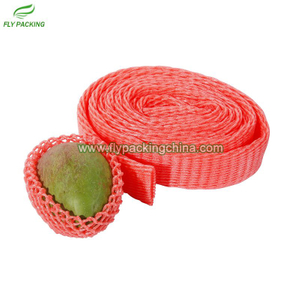
Bruising happens when a hard surface meets soft produce with enough force to rupture cells beneath the skin. A foam net spreads that force across a wider surface area, so instead of one sharp point of contact, the fruit experiences a cushioned, even pressure. This is especially important for thin-skinned fruits like mangoes, where internal damage can appear days after the initial impact and only becomes visible once the fruit reaches a retail shelf.
The same principle applies to glass packaging. Wine bottles and jars crack not from a single dramatic drop but from repeated small vibrations during a long haul. A fruit foam net or equivalent cushioned sleeve absorbs that vibration before it reaches the glass surface, reducing the chance of micro-fractures that turn into full breaks by the time a shipment arrives.
Manufacturers produce several formats to match different packing lines and product sizes. Choosing the wrong format can mean paying for cushioning a product doesn't need, or worse, under-protecting a fragile item. The table below compares the four most common formats used in produce and glassware packing.
Format | Structure | Best Suited For | Key Advantage |
|---|---|---|---|
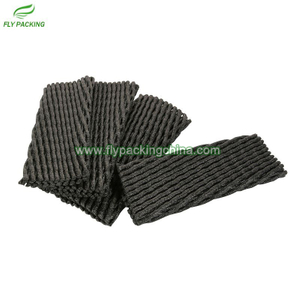
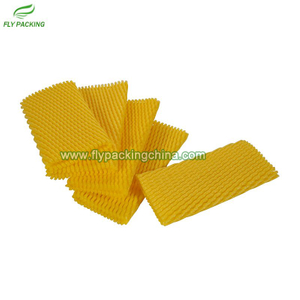
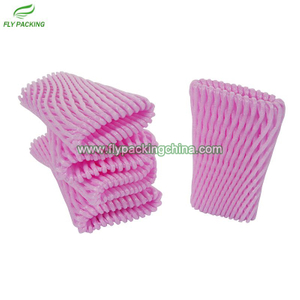
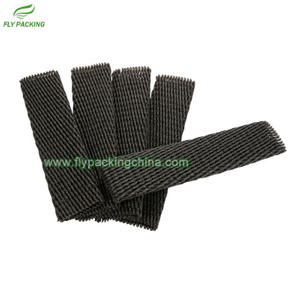
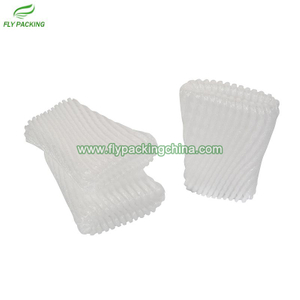
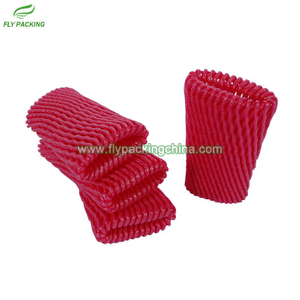
Single-layer mesh | One continuous sleeve layer | Lighter fruits such as apples and pears | Lightweight, lower material cost |
Double-layer mesh | Two overlapping sleeve layers | Heavier or softer produce like mangoes and citrus | Added shock absorption |
Continuous roll format | Uncut, spooled length | High-volume automated packing lines | Easily customized to length |
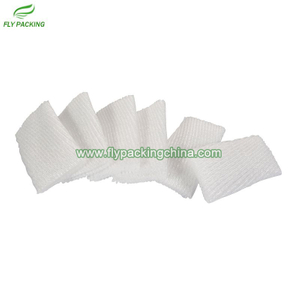
Flat uncut sheet | Unformed mesh sheet | Custom or irregular packaging shapes | Maximum cutting flexibility |
A foam netting supplier that offers all four formats gives buyers more flexibility to match packaging to product without over-engineering the solution.
Fruit exporters are the most visible users, particularly for bruise-prone items like mangoes, pears, and stone fruit. According to product data published by Fly Packing Co., Limited, a manufacturer based in Guangdong, China, double-layer mesh is commonly recommended for heavier produce that needs extra cushioning during long-distance freight.
Wine and beverage producers represent another major use case. Glass bottles shipped in bulk are vulnerable to the same vibration-based damage that affects produce, just with a less forgiving material. A cushioned sleeve wrapped around each bottle neck or body prevents glass-on-glass contact inside the case.
Grape growers and packers also depend heavily on protective mesh, often pairing it with vented liner bags or protective paper to manage both physical impact and moisture control during transit.

Choosing a format depends on three factors: product weight, product fragility, and packing line speed. Lighter fruits with firmer skin, such as apples, generally do well with a single-layer sleeve, which keeps material costs down without sacrificing protection. Choose single-layer mesh if cost efficiency matters more than maximum cushioning.
Heavier or softer items, including mangoes and citrus, benefit more from a double-layer structure. The extra layer adds minimal weight but significantly increases the shock-absorbing capacity. Choose double-layer mesh if the product has a history of bruising complaints or travels unusually long distances.
For businesses running automated packing lines, a continuous roll format reduces manual handling and speeds up throughput. Operations that need custom shapes, such as packaging oddly sized produce or specialty glassware, are better served by flat, uncut sheets that can be die-cut to size.
Consistency matters as much as the material itself. A supplier that can guarantee uniform mesh density across every batch helps packers avoid the inconsistent protection that comes from mixing stock between vendors. Fast communication also matters in a global supply chain; some manufacturers, including Fly Packing Co., Limited, advertise response times within 12 hours for English-language inquiries, which matters when a packing schedule depends on timely sourcing decisions.
Free samples are another practical signal of a reliable supplier. Testing a fruit foam net against an actual product line before committing to a bulk order helps confirm fit, flexibility, and cushioning performance under real packing conditions.
What is the difference between single-layer and double-layer mesh?
Single-layer mesh uses one sleeve of netting and suits lighter, firmer produce. Double-layer mesh adds a second layer for extra cushioning, making it better suited to heavier or more delicate items like mangoes.
How much does protective mesh packaging typically cost?
Pricing varies by material density, layer count, and order volume. Single-layer formats are generally the most cost-efficient option, while double-layer and custom-cut formats carry a higher per-unit price due to the added material.
Can this packaging be used for glass products, not just fruit?
Yes. Cushioned mesh sleeves are widely used for wine bottles, jars, and other glass items to prevent breakage from vibration and contact during transit.
What are the alternatives to mesh netting for produce protection?
Alternatives include foam cushions, foam sheets, and protective paper bags. Many packers combine these materials, pairing mesh sleeves with vented liner bags for moisture control alongside physical protection.
Who typically uses this type of packaging?
Fruit growers, exporters, wine producers, and glassware shippers are the primary users, particularly those handling products prone to bruising, cracking, or breakage during long-distance freight.
Damage during transit rarely comes from one dramatic event. It builds from small, repeated impacts that add up over hundreds of miles of handling. Matching the right foam netting format to a product's weight and fragility is one of the simplest ways a packer or exporter can cut down on rejected shipments and customer complaints. A single-layer sleeve works well for firmer, lighter fruit, a double-layer option suits heavier or more delicate produce, and roll or sheet formats give packing lines the flexibility to handle custom shapes. For businesses evaluating suppliers, requesting free samples and confirming batch consistency are practical first steps toward a packaging solution that holds up from farm to shelf.

| | 1/F, NO.81, CHANGZHEN ROAD, SHUIKOU TOWN, KAIPING CITY, GUANGDONG, CHINA |
| | +86-0-136 3183 6942 / +86-0-134 2677 9895 +86-750-2280358 |
| |