Views: 0 Author: Site Editor Publish Time: 2026-07-29 Origin: Site
Every damaged shipment tells the same story: something moved when it shouldn't have. A glass bottle shifted inside a crate. An apple pressed too hard against another. A ceramic piece absorbed one too many road vibrations. The result is the same—spoiled product, wasted effort, and a customer on the other end who received something they can't use.
Foam cushions solve this problem with a deceptively simple mechanism. They compress under force and recover their shape, redistributing energy across a wider surface area instead of letting it concentrate at a single point. That redistribution is the difference between a product arriving intact and one that doesn't.
This post breaks down how foam cushions work as a shock-absorption system, explores the role of Chinese foam cushion manufacturing in global supply chains, and explains how fruit foam packaging nets extend the same protective principle to fresh agricultural produce.
Foam cushions absorb shock through a process called energy attenuation. When an external force—a drop, a bump, or sustained vibration—contacts a foam cushion, the open or closed cell structure of the foam compresses. That compression spreads the impact force over a larger area and a longer time interval, reducing the peak pressure any single point of a product must absorb.
The material commonly used is polyethylene (PE) foam, a closed-cell foam known for its consistent density, moisture resistance, and durability under repeated stress. Polyethylene foam cushions do not degrade quickly under normal transport conditions, which makes them reliable across long-haul shipping routes.
The protective performance of a foam cushion depends on several variables:
Variable | Effect on Protection |
|---|---|
Foam density | Higher density = greater resistance to compression under heavy loads |
Cell structure | Closed-cell foam resists moisture; open-cell foam offers softer cushioning |
Cushion thickness | Thicker cushions absorb greater impact forces |
Surface contact area | Larger contact area distributes force more evenly |
Temperature range | Foam must remain flexible across shipping environment temperatures |
Matching these variables to the specific product being shipped—its weight, fragility, and transport conditions—determines how effective the cushion will be in practice.

China has become a primary source of foam cushion packaging for importers and distributors across North America, Europe, Southeast Asia, and beyond. The combination of scaled manufacturing capacity, material availability, and export infrastructure makes Chinese suppliers a practical choice for businesses sourcing protective packaging in volume.
Manufacturers like Fly Packing Co., Limited—based in Kaiping City, Guangdong Province—produce foam cushions alongside complementary packaging materials including foam nets, foam sheets, and backer rods. These manufacturers supply agricultural exporters, electronics distributors, and general logistics operators who need reliable, repeatable protection across large shipments.
Several factors define a quality China foam cushion supplier:
Material consistency: PE foam with uniform density across production batches
Custom sizing: Ability to cut or mold cushions to specific product dimensions
Export readiness: Experience with international logistics, documentation, and container optimization
Sample availability: Reputable suppliers offer samples before bulk orders are confirmed
Response time: Established exporters typically respond to inquiries within 12 hours
Sourcing foam cushions from a Chinese manufacturer allows buyers to access competitive pricing without sacrificing the protective performance required for fragile or high-value goods. Container-efficient packing methods—where cushions are compressed or stacked to fit more units per shipment—further reduce per-unit freight costs.
Fresh fruit presents a different set of transport challenges. Unlike electronics or glassware, produce is alive. It bruises from surface friction, pressure from adjacent items, and vibration over long distances. A single bruise on a mango or apple doesn't just damage that piece of fruit—it accelerates spoilage and can compromise surrounding produce.
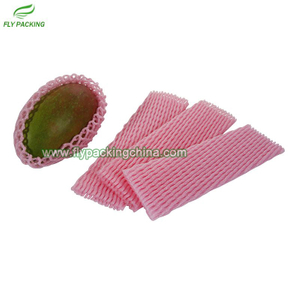
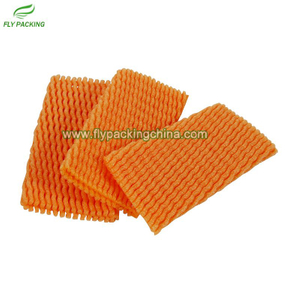
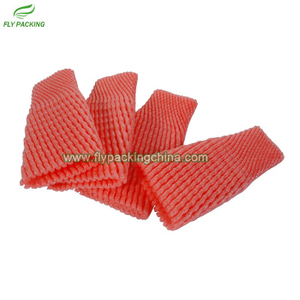
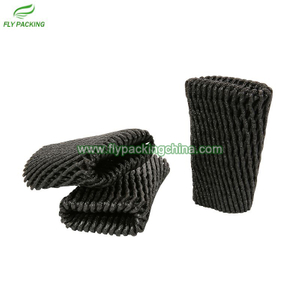
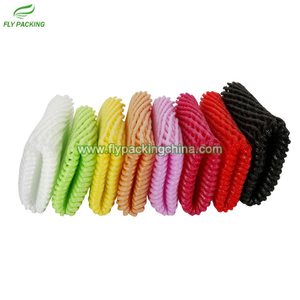
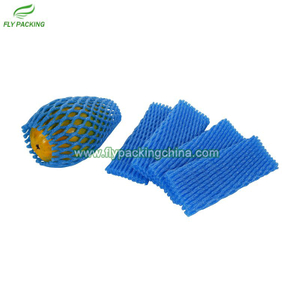
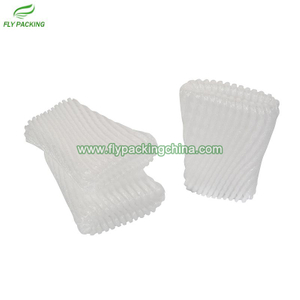
Fruit foam packaging nets address this directly. These are tubular or sleeve-form nets made from polyethylene foam, designed to wrap individual pieces of fruit. The foam net creates a cushioned barrier around each item, preventing direct contact between pieces and absorbing the micro-impacts that accumulate during transport.
The practical benefits are significant:
Surface protection: The soft foam surface prevents friction-based abrasion on fruit skin
Individual isolation: Each piece of fruit sits within its own cushioned sleeve, eliminating fruit-on-fruit contact
Ventilation: The net structure allows airflow around the fruit, reducing heat buildup during transit
Lightweight design: Foam nets add minimal weight to the shipment while delivering meaningful protection
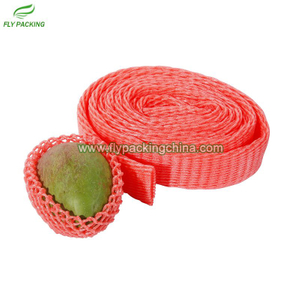
Compatibility: Nets are available in single-layer and double-layer variants, as well as pre-cut sleeves or continuous rolls, to accommodate different fruit sizes and packing workflows
Fly Packing Co., Limited produces fruit foam packaging nets in multiple configurations—including single-layer polyethylene foam fruit nets, double-layer foam nets, and foam net rolls for high-volume packing operations. These products serve fruit growers and exporters shipping mangoes, apples, grapes, citrus, and other delicate produce across international markets.
The selection between a single-layer and double-layer net depends on the fruit's surface sensitivity and the anticipated handling intensity of the transport route. Softer fruits with thinner skins benefit from the additional cushioning that double-layer nets provide.
Not all foam packaging serves the same purpose. Foam cushions, foam sheets, foam nets, and backer rods each address different aspects of the protection problem. Understanding which format fits your shipment type leads to better outcomes and fewer losses.
Choose foam cushions when shipping rigid products—electronics, bottles, glassware, or manufactured goods—that need stable positioning and impact absorption within a box or crate.
Choose fruit foam packaging nets when shipping individual pieces of produce that require surface protection and separation during transit.
Choose foam sheets when lining the interior of crates or boxes to create a uniform cushioned surface beneath or around products.
The most effective packaging strategies often combine formats. A crate of mangoes might use foam net sleeves on each piece of fruit, foam sheets lining the base and sides of the crate, and backer rods to stabilize layers within the container.
Foam cushions and fruit foam packaging nets represent a practical, proven approach to reducing product damage during transport. The mechanism is consistent: absorb energy, distribute force, protect the surface. Applied correctly—with the right density, thickness, and format for the shipment—foam packaging keeps products intact across the handling conditions of international logistics.
For businesses sourcing foam cushion packaging at scale, Chinese manufacturers like Fly Packing Co., Limited offer a reliable combination of manufacturing capability and export experience. Fly Packing produces foam cushions, fruit foam packaging nets in single- and double-layer formats, foam sheets, and complementary packaging materials for agricultural and general freight applications. Samples are available, and the team responds to export inquiries within 12 hours. Visit www.flypackingchina.com or contact info@flypackingchina.com to discuss your packaging requirements.
Are foam cushions reusable across multiple shipments?
Polyethylene foam cushions can be reused if they have not been compressed beyond their recovery threshold. Light to moderate use typically allows for several shipment cycles. Heavy impacts or sustained compression may reduce their effectiveness over time.
Which foam density is best for fragile electronics during transport?
Higher-density PE foam—typically in the range of 20–30 kg/m³—provides firmer support for heavier electronics, while lower-density foam offers softer cushioning for lighter, more delicate items. The correct choice depends on the product's weight and fragility.
Do fruit foam packaging nets affect fruit shelf life after delivery?
Fruit foam nets protect the surface of produce during transit but are removed before display or sale. They do not affect the internal quality or shelf life of the fruit, provided the fruit was packed in good condition.
Can foam cushion packaging be customized for specific product shapes?
Yes. Most foam cushion manufacturers offer custom cutting and molding to fit specific product dimensions. This is particularly useful for irregularly shaped items that standard packaging formats cannot accommodate.
Is polyethylene foam safe for food contact applications like fruit packaging?
Polyethylene foam used in fruit packaging nets is generally food-contact safe and does not transfer harmful substances to produce. Buyers should confirm material certifications with their supplier before use in regulated markets.
TL;DR: Foam cushions protect products during transport by absorbing and dispersing shock, vibration, and pressure. Used across industries—from electronics to fresh produce—foam cushion packaging reduces damage rates, minimizes returns, and keeps fragile goods intact from origin to destination. Fruit foam packaging nets offer an additional layer of protection for perishable agricultural exports.

| | 1/F, NO.81, CHANGZHEN ROAD, SHUIKOU TOWN, KAIPING CITY, GUANGDONG, CHINA |
| | +86-0-136 3183 6942 / +86-0-134 2677 9895 +86-750-2280358 |
| |