Views: 13 Author: Site Editor Publish Time: 2026-07-24 Origin: Site
Damaged goods are expensive. A single shipment of bruised mangoes or cracked bottles can erase the margin on an entire container. For exporters managing long-haul freight across multiple climates and handling conditions, packaging isn't a secondary concern—it's a core operational decision.
Foam net packaging has earned its place in global supply chains precisely because it solves this problem without adding significant weight, cost, or complexity. Lightweight, stretchable, and available in multiple configurations, foam nets wrap around individual items and absorb the shocks that rigid packaging often can't.
China has emerged as the dominant source for foam net packaging, with manufacturers offering broad product ranges, fast lead times, and export-ready logistics. Among them, Fly Packing Co., Limited , based in Kaiping City, Guangdong, has been supplying foam nets to agricultural and industrial exporters since 2002.
This article covers three core product categories—China foam net, China double-layer foam net, and China single-layer foam net—and breaks down the differences, applications, and selection criteria for each.
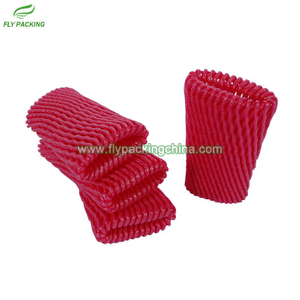
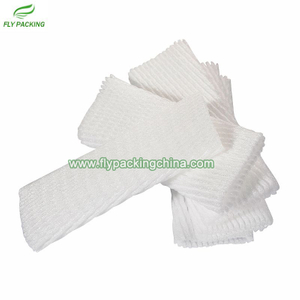
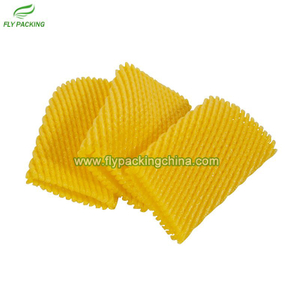
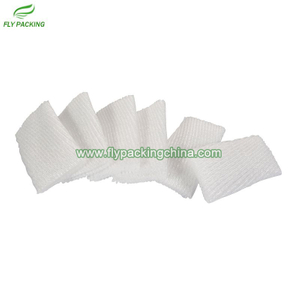
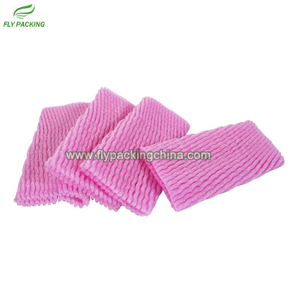
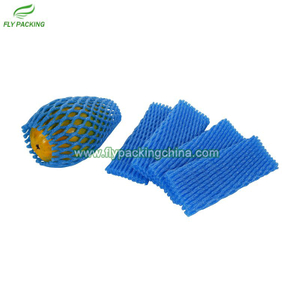
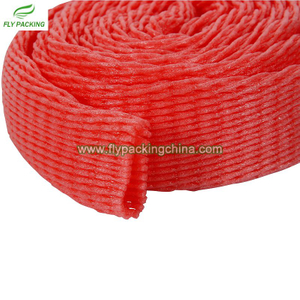
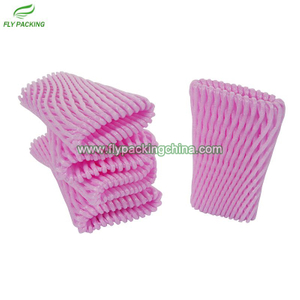
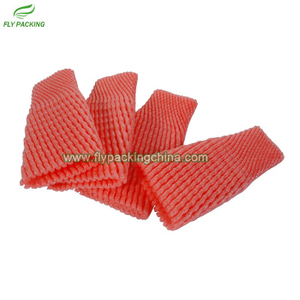
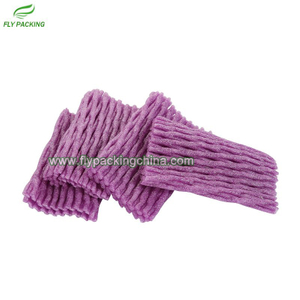
China foam net refers to polyethylene (PE) foam mesh sleeves manufactured in China for use in protective packaging. The material is extruded into a tubular net structure that stretches to accommodate items of varying sizes, then contracts to hold snugly against the surface.
The core advantages of PE foam net are straightforward:
Cushioning: The foam cells absorb impact during transit, reducing surface bruising and breakage.
Friction protection: The mesh creates a buffer layer that prevents items from rubbing against each other or against hard packaging surfaces.
Lightweight: Foam net adds minimal weight to a shipment, keeping freight costs low.
Chemical inertness: PE foam does not react with fruit skin, glass, ceramics, or most industrial surfaces.
Moisture resistance: The closed-cell structure resists water absorption, making it suitable for cold-chain and humid environments.
China foam net is used across a wide range of industries—fresh produce, glassware, ceramics, electronics, and fragile industrial components. The versatility of the material, combined with China's manufacturing scale, has made it the default choice for exporters sourcing protective packaging at volume.

China double-layer foam net consists of two interlocked layers of foam mesh rather than one. The dual-layer construction increases cushioning thickness and creates a more rigid sleeve that holds its shape around the wrapped item.
This format is particularly well-suited for:
High-value produce such as mangoes, pears, and kiwi fruit, where surface blemishes directly affect sale price
Glass bottles and wine packaging, where impact absorption must be consistent across long-haul shipments
Ceramic and pottery goods, which require a firmer fit to prevent shifting inside the sleeve
The double-layer structure also provides better thermal insulation than single-layer foam, offering a secondary benefit for temperature-sensitive shipments.
Fly Packing Co., Limited produces a range of double-layer foam nets, including the Double Layers Foam Net D-12, designed for fruit exporters requiring consistent protection across high-volume orders.
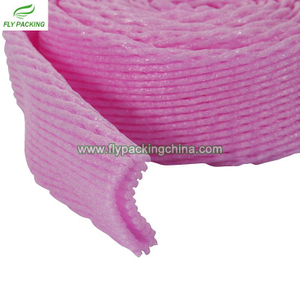
China single-layer foam net uses one extruded mesh layer and remains the most widely used format globally. It is thinner, more flexible, and more economical than the double-layer version—making it the practical choice for exporters who need broad coverage at scale.
Single-layer foam nets are standard for:
Apples, oranges, and avocados, where moderate cushioning is sufficient for regional or short-haul shipping
Light ceramics and glass, where weight and cost efficiency matter more than heavy-duty protection
High-volume fruit packing operations, where speed of application and cost per unit are the primary metrics
Fly Packing Co., Limited's Single Layer Polyethylene Foam Fruit Net is available in multiple sizes and densities to suit different produce types and packing lines.
Choosing between the two formats depends on the fragility of the item, the duration and conditions of the shipment, and the cost structure of the operation.
Feature | Single-Layer Foam Net | Double-Layer Foam Net |
|---|---|---|
Cushioning thickness | Moderate | High |
Flexibility | High | Medium |
Weight | Lighter | Slightly heavier |
Cost per unit | Lower | Higher |
Best for | Everyday produce, light goods | Fragile fruit, glass, ceramics |
Thermal insulation | Minimal | Moderate |
Application speed | Fast | Slightly slower |
Typical use case | Apples, oranges, avocados | Mangoes, wine bottles, pears |
Choose China single-layer foam net when volume, speed, and cost efficiency are the primary drivers. Choose double-layer foam net when the item is high-value, fragile, or subject to rough handling during long-distance freight.

Fly Packing Co., Limited operates from Kaiping City, Guangdong Province, and exports foam net packaging to markets across Asia, Europe, the Middle East, and beyond. The company offers:
Free samples for pre-order evaluation
Custom sizing across both single-layer and double-layer formats
Fast and stable delivery timelines
English-language support with inquiry responses within 12 hours
To-door logistics, including container optimization to reduce per-unit freight costs
Certifications are available for download at www.flypackingchina.com/download.html, and the full product catalog—including foam net rolls, uncut foam mesh, foam cushions, and fruit protection paper bags—can be browsed at www.flypackingchina.com.
Are China foam nets food-safe for direct contact with fresh produce?
Yes. Polyethylene foam nets are chemically inert and do not transfer harmful substances to fruit or vegetable skin. They are widely accepted in fresh produce export operations globally.
Can single-layer and double-layer foam nets be customized for specific fruit sizes?
Yes. Both formats are available in a range of diameters and lengths. Manufacturers like Fly Packing Co., Limited produce custom sizes to match specific produce dimensions or packaging line requirements.
Is foam net packaging suitable for cold-chain shipments?
Yes. PE foam net resists moisture absorption and maintains its cushioning properties across a range of temperatures, making it compatible with refrigerated and cold-chain logistics.
Is there a minimum order quantity for China foam net exports?
Minimum order quantities vary by manufacturer and product type. Contacting Fly Packing Co., Limited directly at info@flypackingchina.com will provide specific MOQ details and pricing for your required volume.
Are there environmentally friendly alternatives within the foam net category?
Some manufacturers are developing PE foam nets with recycled content or reduced-thickness options that lower material use. Checking with your supplier about available eco-options is advisable if sustainability is a procurement criterion.
Foam net packaging is a simple product with a significant impact on export outcomes. Selecting the right format—single-layer for cost-efficient, high-volume operations, or double-layer for fragile and high-value goods—reduces damage rates, lowers return and spoilage costs, and protects a supplier's reputation in destination markets.
China remains the most reliable and cost-competitive source for both formats. Manufacturers like Fly Packing Co., Limited (www.flypackingchina.com) bring over two decades of export experience, a broad product range, and responsive logistics to buyers sourcing foam net packaging at scale. For exporters looking to tighten their damage rates and strengthen their supply chain, choosing the right foam net from a proven Chinese supplier is a practical and measurable step forward.
TL;DR: Foam net packaging—available in single-layer and double-layer formats—protects fragile goods during international shipping by absorbing impact, reducing friction, and preventing surface damage. China-based manufacturers like Fly Packing Co., Limited supply both formats to exporters worldwide, offering flexible sizing, customizable thickness, and competitive bulk pricing.

| | 1/F, NO.81, CHANGZHEN ROAD, SHUIKOU TOWN, KAIPING CITY, GUANGDONG, CHINA |
| | +86-0-136 3183 6942 / +86-0-134 2677 9895 +86-750-2280358 |
| |