Views: 5 Author: Site Editor Publish Time: 2025-12-22 Origin: Site
Every year, the global agricultural industry loses billions of dollars due to damaged produce during transit. For fruit distributors and exporters, the difference between a profitable shipment and a financial loss often comes down to a single factor: packaging. When delicate items like mangoes, pears, or glass bottles travel across oceans or continents, they require superior shock absorption to arrive in pristine condition.
This is where the China foam net industry has revolutionized protective packaging. By combining cost-efficiency with high-grade Expanded Polyethylene (EPE) materials, manufacturers in China have become the go-to source for businesses seeking reliable protection for their goods. Sourcing these materials directly from established production hubs offers distributors a competitive edge, ensuring product safety while optimizing supply chain costs.
In this guide, we will explore why sourcing foam nets from China is a smart business move, the different types of netting available, and how to select the right partner for your packaging needs.
Before understanding the market, it is essential to understand the material. Most high-quality foam nets are made from Expanded Polyethylene (EPE). This material is favored because it is non-abrasive, lightweight, and possesses a unique closed-cell structure.
This structure allows the foam to absorb impact energy rather than transferring it to the product. Whether it is a bumpy truck ride or rough handling at a port, the foam net acts as a buffer. Furthermore, EPE foam is breathable. For fresh produce, airflow is critical to prevent rot and maintain freshness. A solid plastic wrap might suffocate the fruit, but a foam net structure provides protection while allowing the product to "breathe."
China has established itself as the global leader in packaging manufacturing, and the foam net sector is no exception. Importers choose China foam net products for several compelling reasons.
Chinese factories operate at a scale that is difficult to match elsewhere. High-volume production lines mean that the unit cost of a single foam net is significantly lower than in other markets. However, low cost does not equate to low quality. Manufacturers utilize advanced extrusion technology to ensure consistent density and elasticity in every batch.
One size rarely fits all in agriculture. A papaya requires different tension and size specifications than a wine bottle. Chinese manufacturers excel in customization, offering variations in:
· Length and Width: Tailored to specific fruit calibers.
· Color: Used for branding or color-coding fruit ripeness/grades.
· Density: varying thickness levels for different fragility requirements.
Experienced exporters in China have mastered the art of logistics. Because foam is lightweight but voluminous, shipping it can be expensive if not packed correctly. Top-tier suppliers utilize special packing methods to compress the nets, fitting significantly more quantity into a container to save on freight costs.
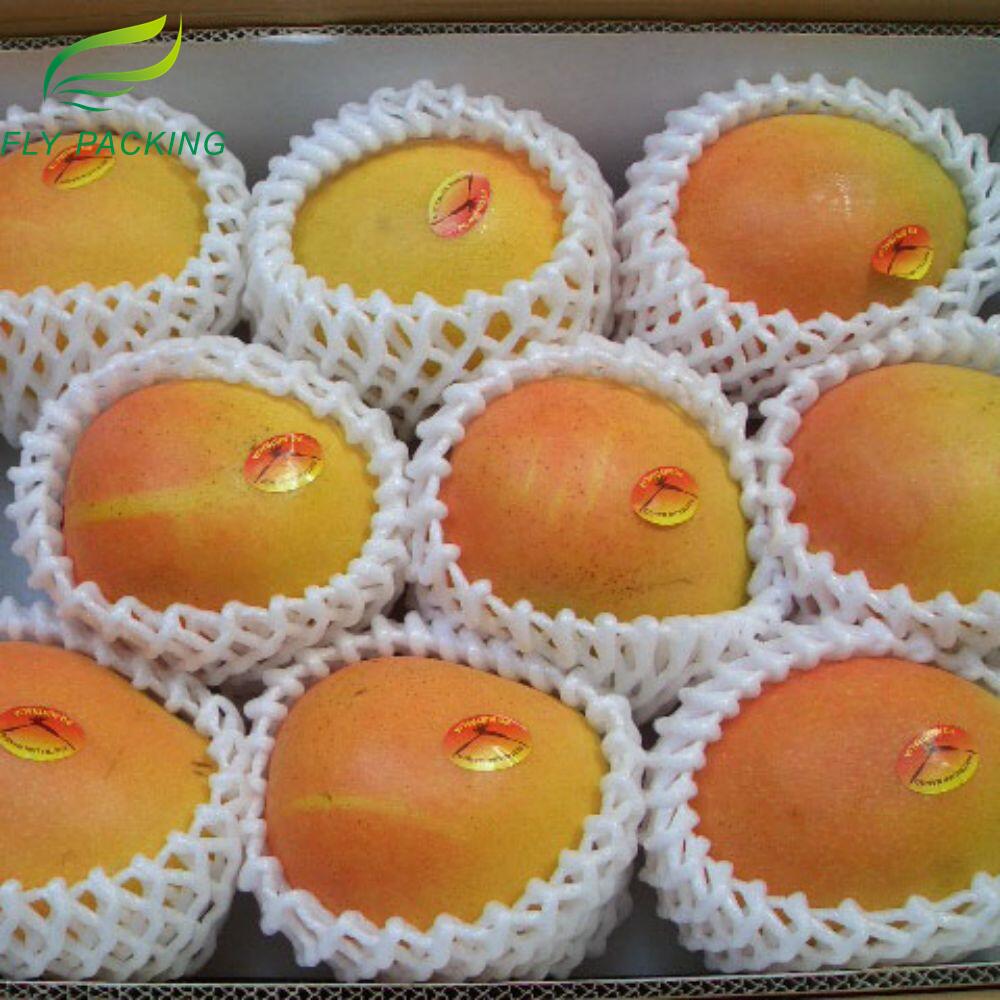
When you browse the catalog of a specialized manufacturer, you will encounter several specific types of netting. Understanding the difference is vital for choosing the right protection for your specific inventory.
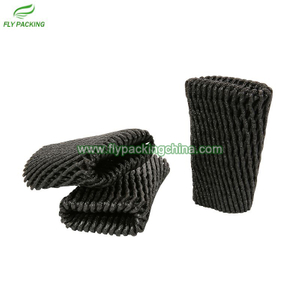
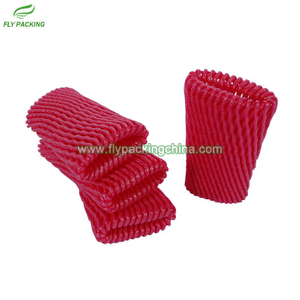
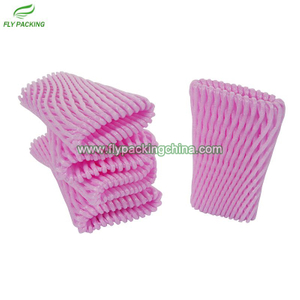
These are the premium choice for heavy or high-value fruits. The double-layer construction offers superior cushioning and is often used for premium export-grade apples, pears, and mangoes. The extra thickness prevents the fruit from touching hard surfaces, virtually eliminating bruising.
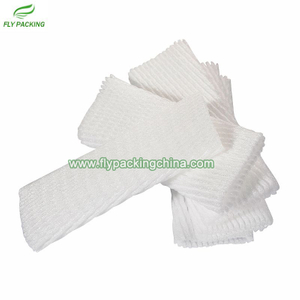
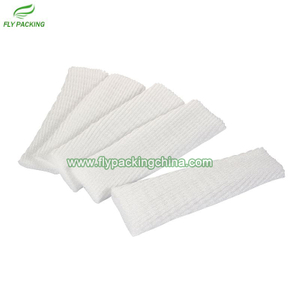
This is the industry standard for general produce protection. It provides adequate cushioning for lighter items and is highly flexible. It is cost-effective and sufficient for local transport or less fragile produce items.
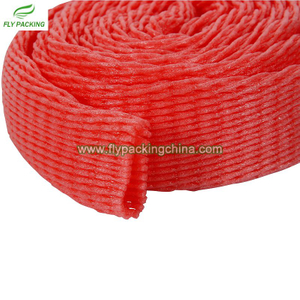
For businesses that have automated packing lines or need to cut nets to random lengths on the fly, foam net rolls are the ideal solution. These are continuous rolls of netting that provide flexibility for packaging items of varying lengths, such as melons or industrial parts.
Similar to rolls but often provided in specific, longer segments, uncut foam nets allow for manual sizing during the packing process. This is particularly useful for varied produce sizes within a single harvest.
To help you decide which product suits your application, refer to the comparison table below.
Product Type | Best Application | Key Feature | Protection Level |
Double Layer Net | Premium export fruits (Mango, Apple) | Extra thickness, high density | High |
Single Layer Net | Domestic fruit transport, Vegetables | Flexible, lightweight | Medium |
Foam Net Roll | Automated packing, Industrial parts | Continuous length, customizable | Variable |
Bottle Netting | Wine, Spirits, Glass Jars | Fitted shape, shock absorption | High |
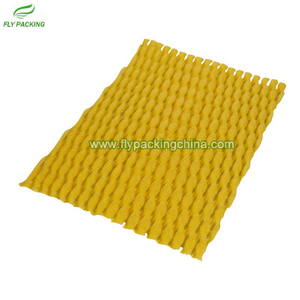
Colored Netting | Branding, Grading produce | Visual differentiation | Medium/High |
While the term "fruit net" is commonly used, China foam net products are versatile. The shock-absorbing properties of EPE foam make it perfect for protecting fragile industrial and consumer goods.
· Glassware and Ceramics: Wine bottles, vases, and jars are prone to shattering. A foam sleeve provides a snug fit that prevents glass-on-glass contact during shipping.
· Electronics: Sensitive components often require non-static and physical protection. Small foam nets can protect parts from scratches and minor impacts.
· Metal Parts: Precision-machined metal parts can be damaged by scratching against each other. Netting creates a protective barrier without adding significant weight to the shipment.
Finding a supplier is easy; finding a reliable partner is difficult. When looking for a manufacturer, you need a company with a proven track record, high production capacity, and excellent service.
Fly Packing Co., Limited (Kaiping Feiliyang Packing Materials Co., Ltd.) represents the gold standard in this industry. Established in 2002, they have over two decades of experience as a professional manufacturer and exporter of agricultural packing materials.
Located in Kaiping City, Guangdong, their factory covers 4,000 square meters and operates four high-quality foam extrusion production lines. This infrastructure allows for an annual output of over 450 tons, ensuring that large orders are fulfilled with quick and stable delivery times.
· Rapid Communication: They pride themselves on replying to inquiries in English within 12 hours.
· Diverse Product Range: From foam cushions to grape bags and backer rods, they offer a comprehensive catalog. You can view their full range of products here: Fly Packing Products.
· Global Reach: With wealthy professional export experience, they offer TO-DOOR service, simplifying the complex logistics of international trade for their clients.
· Free Samples: To ensure you are confident in the quality, Fly Packing provides free samples before you commit to a bulk order.
If you are interested in learning more about their history and manufacturing capabilities, visit their About Us page.
In the competitive world of produce distribution and export, the condition of your product upon arrival is your brand's reputation. Damaged goods lead to claims, returns, and a loss of buyer trust. Investing in high-quality EPE foam packaging is not just an expense; it is an insurance policy for your inventory.
By sourcing China foam net products, you gain access to world-class manufacturing at competitive prices. Whether you need double-layer protection for premium mangoes or continuous rolls for an automated line, the options are vast.
Do not let poor packaging cut into your profits. Partner with a manufacturer that understands the nuances of global shipping and product protection.

| | 1/F, NO.81, CHANGZHEN ROAD, SHUIKOU TOWN, KAIPING CITY, GUANGDONG, CHINA |
| | +86-0-136 3183 6942 / +86-0-134 2677 9895 +86-750-2280358 |
| |