Views: 8 Author: Site Editor Publish Time: 2026-08-18 Origin: Site
Post-harvest losses cost farmers billions every year. A bruised mango, a cracked pear, a scratched apple—this kind of damage rarely happens in the field. It happens in transit, during loading, stacking, and the long journey between farm and market. Packaging is where that battle is won or lost.
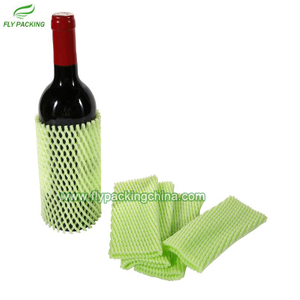
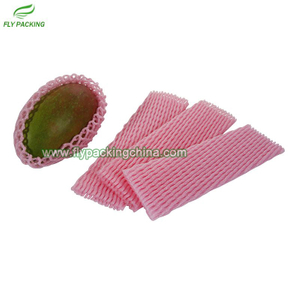
Across agricultural regions in Asia, Latin America, Africa, and beyond, growers and exporters are increasingly relying on one deceptively simple tool: foam netting. These lightweight, flexible sleeves wrap around individual pieces of fruit, creating a cushioned barrier against vibration, friction, and the pressure of stacked crates. The result is less damage, longer shelf life, and stronger returns for farmers.
This post covers how foam nets work, the types available, and the specific role they play in protecting produce from farm to final destination.
Fruit is fragile. Even varieties with thick skin—avocados, mangoes, citrus—are vulnerable to surface bruising under sustained pressure or repeated vibration. Once damaged, fruit degrades faster, loses market value, and often gets rejected entirely by buyers and export inspectors.
For small and mid-scale farmers, a single rejected shipment can erase an entire season's margin. For large exporters, cumulative damage across hundreds of containers becomes a significant operational problem. The Food and Agriculture Organization of the United Nations (FAO) estimates that between 20% and 50% of fresh produce in developing countries is lost between harvest and consumption—much of it due to inadequate packaging and handling.
Solving this doesn't require complex technology. Often, it starts with wrapping each piece of fruit individually before it ever enters a crate.
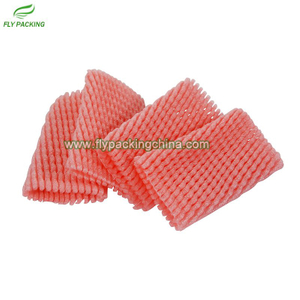
The core function of foam netting is straightforward: it creates a soft, shock-absorbing layer around each fruit, preventing direct contact between pieces and between fruit and hard surfaces. Made from expanded polyethylene (EPE), the material is lightweight, flexible, moisture-resistant, and reusable in many supply chain contexts.
Beyond cushioning, foam netting also:
Reduces friction damage caused by fruit rubbing against each other during transport
Maintains fruit appearance, preserving the visual quality that drives purchase decisions
Supports stacking by distributing weight more evenly across a crate
Extends shelf life by reducing the bruising that accelerates ripening and decay
For growers shipping long distances or across multiple climate zones, these benefits translate directly into fewer returns, fewer complaints, and stronger buyer relationships.

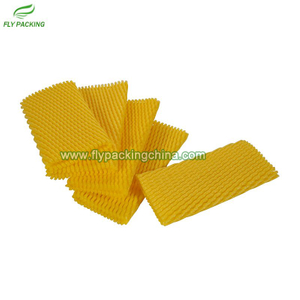
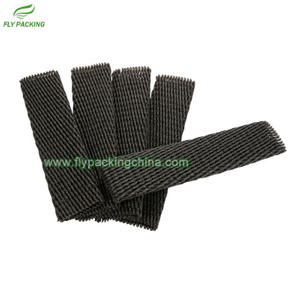
Not all foam nets are built the same. The right Fruit Foam Net depends on the size of the produce, the distance of transport, and the specific vulnerabilities of each fruit variety.
The table below summarizes common configurations and their recommended applications:
Fruit Type | Recommended Net Type | Typical Size Range | Key Benefit |
|---|---|---|---|
Mango | Double layer | 120–180 mm | Extra cushioning for dense, heavy fruit |
Apple / Pear | Single layer | 80–130 mm | Lightweight protection, preserves surface gloss |
Citrus (orange, lemon) | Single layer | 70–120 mm | Friction reduction during long-haul shipping |
Avocado | Double layer | 100–150 mm | Pressure distribution for stacked crates |
Kiwi | Single layer | 60–90 mm | Gentle protection for thin-skinned varieties |
Papaya | Double layer | 150–220 mm | Full-surface coverage for large, delicate fruit |
Each Fruit Foam Net on the market varies in density, elasticity, and thickness. Choosing the wrong size—too tight or too loose—reduces effectiveness. Most reputable suppliers offer free samples so buyers can test fit before committing to bulk orders.
One of the most practical decisions a grower or exporter makes is choosing between single and double layer foam nets. Each has clear advantages depending on the application.
A China single layer foam net is the most widely used option globally. It offers consistent, reliable protection for most medium-weight fruits—apples, pears, citrus, kiwi—at a lower material cost per unit. The single layer design is also lighter, which matters when shipping costs are calculated by weight. For exporters moving large volumes, a China single layer foam net provides an efficient balance between protection and cost.
Double layer nets, by contrast, are thicker and provide additional cushioning. They suit heavier fruits like mangoes, papayas, and avocados, where the risk of pressure bruising is higher. They're also preferred for long-haul shipments crossing multiple transit points, where produce may be handled, loaded, and unloaded several times.
Fly Packing Co., Limited (www.flypackingchina.com), a Guangdong-based manufacturer and exporter operating since 2002, produces both configurations alongside foam rolls, uncut nets, and foam cushions. Their product catalog covers the full range of protective packaging needs for fresh produce exporters.
Foam nets don't only protect fruit during final delivery. They're valuable at multiple stages:
At harvest: Nets applied immediately after picking reduce damage during field transport to packing sheds.
During packing: Individually sleeved fruit stacks more safely in crates, reducing movement.
In cold storage: Nets help maintain surface integrity even as fruit expands and contracts during temperature changes.
During retail display: Nets keep fruit looking fresh and professional on the shelf, extending the window for sale.
This multi-stage utility makes foam netting one of the more versatile tools available to producers at any scale.
Post-harvest loss is a solvable problem. The gap between field and market doesn't have to mean degraded produce, rejected shipments, or reduced returns. The right packaging—applied correctly and consistently—makes a measurable difference.
Foam nets are a proven, accessible solution used by growers and exporters across the globe. Whether the choice is a China single layer foam net for high-volume apple exports or a thicker double layer option for premium mango shipments, the principle is the same: protect the surface, preserve the value.
For farmers and exporters looking to reduce losses, foam netting offers practical results without complex logistics. Suppliers like Fly Packing Co., Limited (www.flypackingchina.com) provide a range of sizes and configurations, along with free samples and direct export support, making it straightforward to find the right fit for any produce type or shipping requirement. Each Fruit Foam Net in their lineup is designed with agricultural exporters in mind—offering lightweight, durable protection that keeps fresh produce market-ready from harvest to delivery.
Are foam nets reusable?
In some supply chain contexts, yes—foam nets can be collected and reused if they remain undamaged. However, for export supply chains where hygiene and standardization matter, single-use nets are the norm.
Do foam nets work for all fruit sizes?
Foam nets are available in a wide range of sizes, typically from 60 mm to 220 mm or larger. Most fruit types have a compatible net size, and suppliers can often customize dimensions for specific produce.
Can foam nets replace foam trays or cardboard dividers?
Foam nets and foam trays serve different functions. Nets wrap individual pieces and prevent surface-to-surface contact; trays hold fruit in fixed positions within a crate. Many exporters use both together for maximum protection.
Are foam nets safe for direct food contact?
Expanded polyethylene (EPE) foam is food-safe, non-toxic, and odorless. It does not transfer chemicals to fruit and is approved for use in food packaging across major export markets.
Is there a minimum order quantity for foam nets?
Minimum order quantities vary by supplier. Manufacturers like Fly Packing Co., Limited offer free samples before bulk orders, which allows buyers to confirm sizing and fit without committing upfront.

| | 1/F, NO.81, CHANGZHEN ROAD, SHUIKOU TOWN, KAIPING CITY, GUANGDONG, CHINA |
| | +86-0-136 3183 6942 / +86-0-134 2677 9895 +86-750-2280358 |
| |