Views: 13 Author: Site Editor Publish Time: 2026-08-12 Origin: Site
Fresh produce and fragile goods face constant threats during transit. Vibration, pressure, friction, and shifting loads cause surface damage long before a product reaches its destination. For growers, packers, and exporters, the difference between a profitable shipment and a damaged one often comes down to a single packing decision.
Foam nets have become a trusted solution across the agricultural and export industries. Lightweight, flexible, and shock-absorbent, they wrap around individual items to cushion them from impact and friction throughout handling and transport. This guide covers the main types of foam nets used in commercial shipping, their practical benefits, and the key factors to consider when selecting the right option for your products.
Every damaged shipment tells the same story. An apple presses too hard against another. A mango shifts inside a crate. A glass bottle absorbs one vibration too many. The cumulative effect of these small forces during long-haul transit results in spoiled product, wasted effort, and lost revenue.
Foam nets address this by creating a cushioned barrier around each individual item. The expanded polyethylene (EPE) material used in most foam nets is soft, resilient, and moisture-resistant. It absorbs the energy of impacts rather than transferring it directly to the product surface — reducing bruising, scratching, and breakage at the point of delivery.
This makes them particularly effective for fresh fruit, glass bottles, ceramics, and any goods vulnerable to surface damage during shipping.
Foam nets come in several configurations. The right choice depends on the product type, shipping route, and packing volume.
Type | Structure | Common Uses | Key Benefit |
|---|---|---|---|
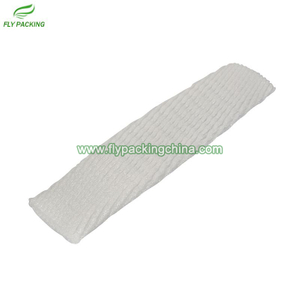
Single Layer Foam Net | One layer of EPE mesh | Apples, pears, mangoes | Lightweight, fast to apply |
Double Layer Foam Net | Two bonded EPE layers | Delicate fruit, glassware | Superior shock absorption |
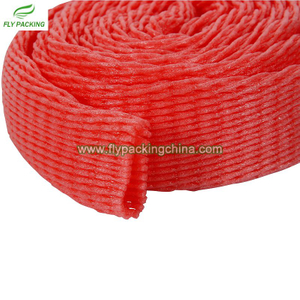
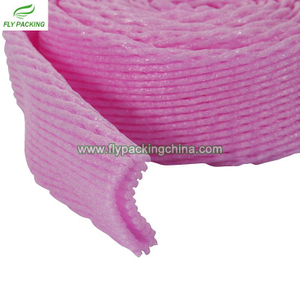
Foam Net Roll | Continuous mesh on a roll | High-volume packing lines | Cuts to any length, reduces waste |
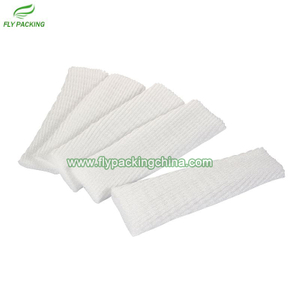
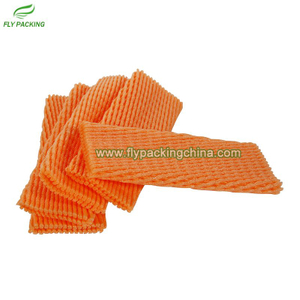
Uncut Foam Net | Pre-sized sleeve format | Standardized fruit sizes | Consistent fit, faster packing |
fruit netting in its various forms is used across the global fresh produce industry — from small family farms to large-scale commercial export operations packing hundreds of thousands of units per season.
Single layer foam nets are the standard choice for most fresh produce. Thin, flexible, and easy to apply by hand or with a semi-automated machine, they suit mid-weight fruits like apples, kiwis, and pears. They add minimal weight to each packed unit while providing reliable surface protection throughout the shipping journey.
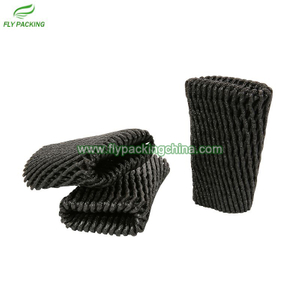
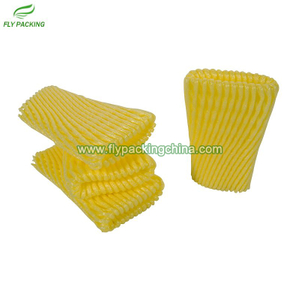
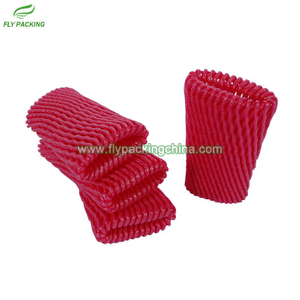
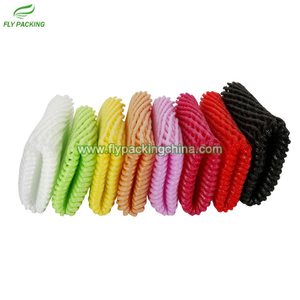
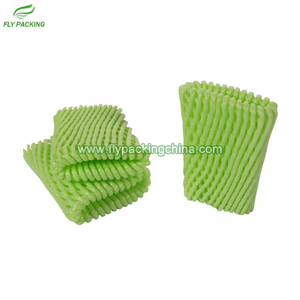
Double layer foam nets offer greater cushioning for more delicate or high-value items. The two bonded EPE layers absorb significantly more shock, making them the better choice for thin-skinned fruits like peaches, or for glass and ceramic goods. The foam net sleeve format is widely used in this category — a pre-formed tube of foam that slides cleanly over a bottle or piece of fruit, creating a snug, even layer of protection on all sides.
The sleeve format also speeds up packing. A worker can apply a foam net sleeve to a single item in seconds, maintaining high throughput even at large daily volumes.

For operations running at scale, continuous rolls offer significant practical advantages. A foam net roll can be cut to any length on the packing line, making it adaptable to different product sizes without the need to stock multiple pre-cut variants. This flexibility reduces material waste and simplifies inventory management.
Uncut nets, supplied in bulk, are pre-sized to fit specific produce dimensions. For packers working with uniform product — a graded apple size, for example — these deliver the fastest application speed and the most consistent result. fruit packing foam net products from manufacturers like Fly Packing Co., Limited (www.flypackingchina.com) are available in trial quantities or full container loads, covering the full range of commercial packing needs.
Foam nets deliver measurable advantages across the supply chain:
Reduced damage rates: Absorbing vibration, friction, and impact directly lowers spoilage and breakage during transit.
Minimal added weight: EPE foam is very light, adding negligible mass per unit shipped.
Moisture resistance: Foam nets do not absorb water, making them suitable for refrigerated and high-humidity environments.
Recyclable material: Many EPE foam net products are recyclable, supporting responsible packaging practices.
Packing line compatibility: Rolls and uncut nets integrate with semi-automated and fully automated equipment.
These qualities make foam nets a standard tool for exporters managing long shipping routes and variable handling conditions.
Product quality matters — but so does supply reliability. Exporters managing tight shipping schedules need a supplier that responds quickly, maintains consistent stock, and delivers on time.
Fly Packing Co., Limited, based in Kaiping City, Guangdong, China, has manufactured and exported foam packaging materials since 2002. Products include single layer and double layer foam nets, foam net rolls, uncut nets, foam cushions, foam sheets, and fruit protection bags. Free samples are available for new buyers, and to-door export services are offered globally. Visit www.flypackingchina.com or contact info@flypackingchina.com for product specifications and ordering details.
Damaged goods rarely happen by accident. They happen when the right packaging isn't in place. Foam nets give exporters and packers a straightforward, proven method for reducing damage from the moment a product is packed until it arrives at its destination.
The right foam net — whether single layer, double layer, roll format, or pre-cut sleeve — matches the specific protection needs of the product and the conditions of the shipping route. Matching the format to the product is the most important step any packer can take before a shipment leaves the warehouse.
Are foam nets suitable for all types of fresh fruit?
Foam nets work well for a wide range of fresh produce, including apples, pears, mangoes, kiwis, peaches, and citrus. Single layer options suit firmer fruits, while double layer options provide additional cushioning for delicate or thin-skinned varieties.
Can foam nets be used for non-agricultural products?
Yes. Foam nets are commonly used to protect glass bottles, ceramic items, and other fragile goods during shipping. The double layer and sleeve formats are particularly well-suited to these applications.
Are EPE foam nets safe for direct contact with food?
EPE (expanded polyethylene) foam is food-safe, non-toxic, and widely used in direct contact with fresh produce globally. It is also moisture-resistant and does not absorb odors or flavors.
Do foam nets add significant weight or bulk to shipments?
No. EPE foam nets are very lightweight and compressible, adding minimal weight and bulk per unit. This makes them practical for high-volume export shipments where freight costs are a key consideration.
Are foam nets available for purchase in small quantities?
Yes. Suppliers like Fly Packing Co., Limited offer free samples and trial quantities for buyers evaluating foam nets for the first time, alongside bulk and container-load options for established export buyers.
TL;DR: Foam nets — including single layer nets, double layer nets, foam net rolls, and uncut nets — protect fragile products from vibration, pressure, and friction during shipping. Widely used across the fresh produce and export industries, they reduce damage rates while adding minimal weight. Fly Packing Co., Limited (www.flypackingchina.com) has supplied foam packaging materials to exporters since 2002 and offers a full product range with free samples available.

| | 1/F, NO.81, CHANGZHEN ROAD, SHUIKOU TOWN, KAIPING CITY, GUANGDONG, CHINA |
| | +86-0-136 3183 6942 / +86-0-134 2677 9895 +86-750-2280358 |
| |