Views: 1 Author: Site Editor Publish Time: 2026-11-12 Origin: Site
Fresh fruit travels a long way before it reaches a dinner table. Grapes picked in a vineyard, mangoes harvested in an orchard, apples pulled from cold storage — all of them face bumps, pressure, and temperature swings on the road to a buyer. One scuff or bruise can turn a premium piece of fruit into unsellable waste, and that loss adds up fast across an entire shipment.
Fly Packing Co., Limited has spent over two decades solving exactly this problem. Based in Kaiping City, Guangdong, China, the company manufactures and exports protective packaging materials built specifically for agriculture, with a sharp focus on fresh fruits and vegetables. Its product lineup includes foam nets, foam cushions, foam sheets, backer rods, and paper and poly bags designed to shield delicate produce from the moment it's packed to the moment it's unpacked.
This article walks through how these materials work, why packhouses and exporters choose them, and what to look for when sourcing protective packaging for a fruit business. Along the way, we'll cover foam netting for fruit, how buyers evaluate fruit packaging bag suppliers, and what separates a reliable foam net for fruit packaging suppliers partnership from a risky one.

A cardboard box alone does almost nothing to stop bruising. Fruit needs a cushioning layer between each piece and its neighbors, plus padding against the walls of the crate or carton. Without that layer, vibration from trucks, trains, and cargo ships transfers straight into the fruit's skin.
Packhouses that skip proper cushioning often see higher rejection rates at the receiving end. Retailers and importers inspect shipments closely, and visible bruising, scuffing, or moisture damage can lead to discounted pricing or outright rejection of a pallet. That's an expensive outcome for growers and exporters who already operate on thin margins.
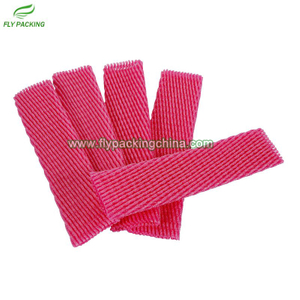
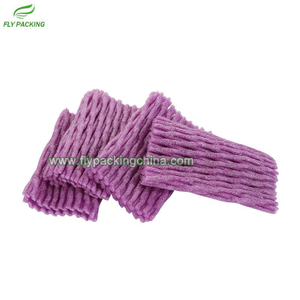
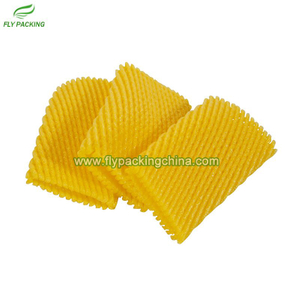
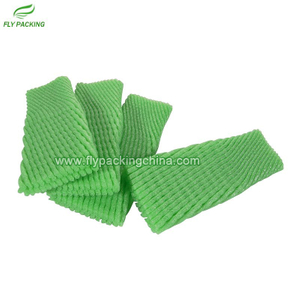
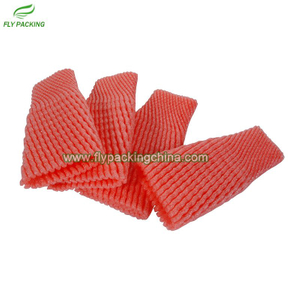
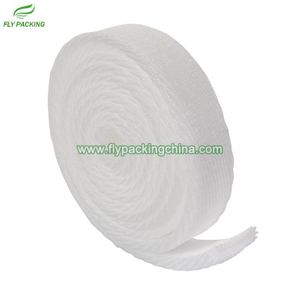
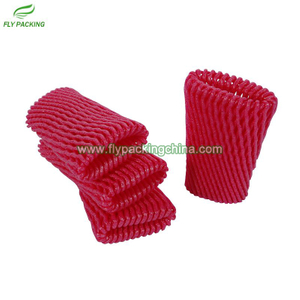
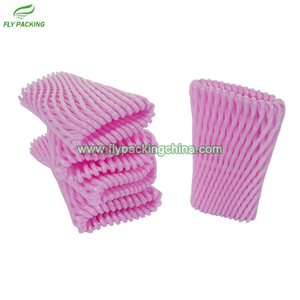
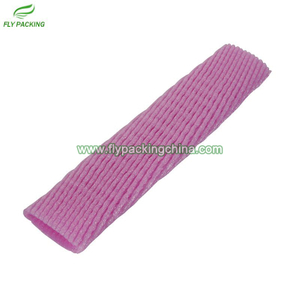
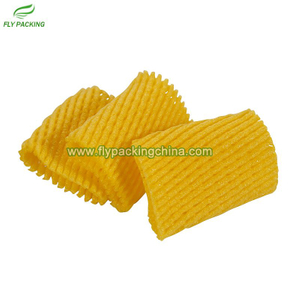
Foam netting for fruit solves this problem by wrapping each individual piece in a stretchy, breathable mesh sleeve. The net absorbs shock, keeps fruit separated from its neighbors, and still allows air to circulate, which matters for produce that continues to ripen or release moisture after harvest.
Not every piece of fruit needs the same level of protection. A sturdy apple can tolerate more handling than a soft, ripe mango or a cluster of grapes with thin, easily punctured skin. Packaging manufacturers address this by offering different net thicknesses, layer counts, and roll widths.
Fly Packing Co., Limited produces both single-layer and double-layer foam nets to match these varying needs. Single-layer nets suit firmer fruit that mainly needs separation and light cushioning. Double-layer nets add extra shock absorption for fragile or high-value produce, such as premium table grapes or delicate stone fruit, where a single bruise can mean a rejected batch.
Beyond fruit netting, the company also supplies foam cushions, foam sheets, and backer rods — materials more commonly associated with construction and industrial sealing work, but which share the same underlying technology: flexible, resilient foam engineered to absorb impact and fill gaps.
Choosing the right packaging material depends on the fruit variety, the shipping distance, and the climate conditions along the route. The table below breaks down common options and when each one tends to make sense.
Material | Best Suited For | Key Benefit |
|---|---|---|
Single-layer mesh sleeve | Firmer fruit, shorter transit routes | Lightweight separation and basic cushioning |
Double-layer mesh sleeve | Soft or high-value fruit, longer transit | Extra shock absorption for fragile skins |
Paper protection bag | On-tree bagging before harvest | Shields fruit from pests, sun scald, and pesticide residue |
Poly or liner bag | Bulk packing, moisture-sensitive produce | Retains humidity and limits dehydration |
Foam cushion or sheet | Crate and carton lining | Reduces vibration damage during transport |
No single material covers every scenario, which is why many exporters mix and match — bagging fruit on the tree, then adding mesh sleeves and cushioning once it reaches the packhouse.

Sourcing packaging overseas carries real risk if quality control slips. Buyers evaluating fruit packaging bag suppliers typically check a handful of things before committing to an order: consistent material thickness across production runs, fast and clear communication across time zones, documented certifications, and a track record of on-time delivery.
Fly Packing Co., Limited addresses these concerns directly. The company responds to inquiries in English within 12 hours, offers quick and stable delivery timelines, and provides free samples so buyers can test material quality before placing a full order. Its export team also uses specialized packing methods to fit more product into each container, which lowers freight cost per unit for the buyer.
Certifications matter too, especially for produce headed into regulated markets like the EU or North America. A supplier that can document its compliance history gives buyers one less thing to worry about when fruit is already perishable and timelines are tight.
Finding a dependable foam net for fruit packaging suppliers relationship often comes down to three things: sample testing, order flexibility, and communication speed. A supplier willing to send free samples lets a buyer verify net stretch, breathability, and durability firsthand, rather than relying on a spec sheet alone.
Order flexibility matters for growers whose harvest volume shifts season to season. A supplier that can scale production up or down, and that offers multiple roll widths and layer options, fits better into an unpredictable agricultural calendar than one locked into a single standard product.
Communication speed rounds out the list. Produce doesn't wait. A delayed response to a sourcing question or a shipping issue can mean missed harvest windows or spoiled inventory sitting in a warehouse. Fly Packing Co., Limited has built its reputation in part on fast turnaround for inquiries, which matters when a customer needs answers before fruit starts moving.
Foam netting wraps each piece of fruit in a stretchy mesh sleeve that absorbs shock from vibration and impact while keeping fruit pieces separated so they don't rub or press against each other in transit.
Single-layer nets offer basic cushioning and separation suited to firmer produce, while double-layer nets provide extra shock absorption for softer or higher-value fruit traveling longer distances.
Paper protection bags are typically applied earlier, while fruit is still on the tree, to shield it from pests, sun damage, and pesticide residue. Foam netting is added later, during packing, for cushioning and separation during transport.
Timelines vary by supplier and shipping method, but companies that prioritize fast customer response, such as Fly Packing Co., Limited, often process sample requests and reply to inquiries within 12 hours.
Buyers should verify material consistency, request free samples, confirm relevant certifications, and assess how quickly and clearly the supplier communicates, since all of these factors affect order reliability.
Protective packaging isn't a minor detail tacked onto the end of the supply chain. It directly affects how much fruit survives transport in sellable condition, which in turn shapes a grower's or exporter's bottom line. Choosing the wrong material, or the wrong supplier, can erase the value of an otherwise successful harvest.
Fly Packing Co., Limited has supplied foam nets, cushions, backer rods, and fruit protection bags since 2002, built around fast communication, sample-based quality checks, and export-ready logistics support. For growers and exporters weighing their options, requesting a sample shipment is a practical first step toward confirming whether a material holds up under real shipping conditions.
In short: foam netting cushions individual fruit pieces and prevents bruising in transit, paper bags protect fruit earlier in the growing cycle, and the right supplier relationship — built on sample testing, fast communication, and delivery reliability — determines how much of a harvest actually reaches market in good condition.

| | 1/F, NO.81, CHANGZHEN ROAD, SHUIKOU TOWN, KAIPING CITY, GUANGDONG, CHINA |
| | +86-0-136 3183 6942 / +86-0-134 2677 9895 +86-750-2280358 |
| |