Views: 1 Author: Site Editor Publish Time: 2026-11-10 Origin: Site
Every piece of fruit that leaves a packhouse faces bruising, scuffing, and compression before it ever reaches a shelf. Trucks jolt over rough roads, crates stack on top of each other, and temperature shifts stress delicate skins along the way. For growers, exporters, and distributors, the difference between a saleable crop and a wasted one often comes down to the packaging wrapped around each piece.
This is where protective netting and cushioning materials earn their keep. Lightweight, breathable, and shock-absorbing, these materials cradle fruit during handling, stacking, and transit so that bruises and abrasions never get the chance to form. Manufacturers like Fly Packing Co., Limited, based in Guangdong, China, have built their business around producing these exact solutions for agricultural exporters worldwide.
Below, we'll break down the types of protective packaging available, how they're used across the supply chain, and what buyers should look for when sourcing a supplier.
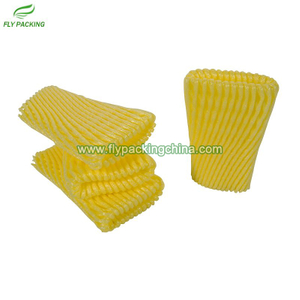
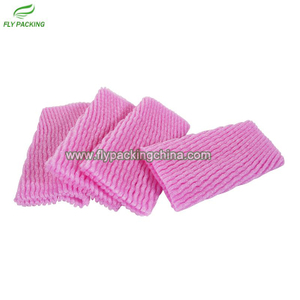
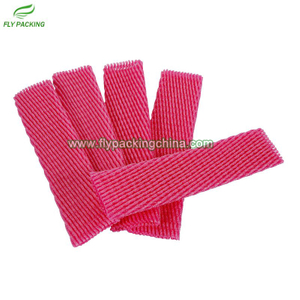
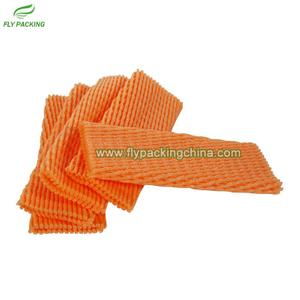
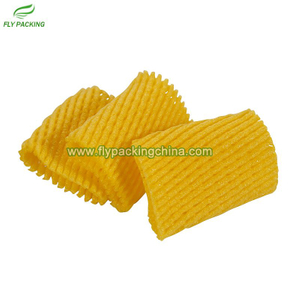
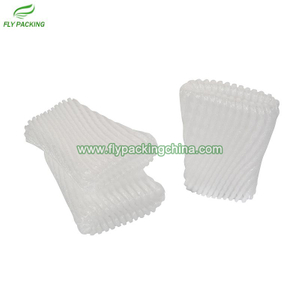
Foam fruit netting is designed to wrap individual pieces of produce in a soft, expandable sleeve. The open-cell structure compresses on impact and springs back into shape, absorbing shock before it reaches the fruit's skin. This matters most for thin-skinned varieties like peaches, pears, and plums, where even minor pressure can leave a visible bruise.
The material is also breathable. Unlike plastic wrap, which traps moisture and accelerates spoilage, netting allows air to circulate around the fruit. That airflow helps slow condensation buildup inside shipping cartons, which in turn reduces mold growth during long-haul transit.

A fresh fruit foam net is typically produced as either a single-layer or double-layer mesh, depending on how much cushioning a specific fruit variety requires. Thicker, double-layer nets suit heavier fruit like apples and citrus, while single-layer nets are often reserved for lighter produce such as berries or stone fruit that need less structural support but still benefit from surface protection.
Compared to standard packaging film, these nets stretch to fit irregular shapes without tearing. A net sized for a medium apple can expand around a slightly larger one without losing its protective tension. This flexibility reduces the number of SKUs a packhouse needs to stock, since one net size often accommodates a range of fruit dimensions.
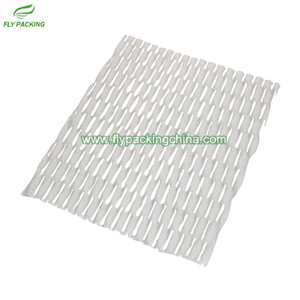
Continuous Foam Mesh comes supplied in rolled form rather than pre-cut sleeves, which makes it suited to automated or semi-automated packing lines. Operators can feed the roll directly into cutting equipment, sizing each sleeve on demand rather than pulling from a fixed-size supply. For operations processing thousands of units per shift, this setup cuts down on material waste and keeps packing speed consistent.
This rolled format also simplifies storage. A single roll takes up far less warehouse space than boxes of pre-cut netting, which matters for exporters balancing packaging stock against seasonal harvest volumes.

Material Type | Best Suited For | Key Benefit | Typical Format |
|---|---|---|---|
Foam fruit netting | Thin-skinned fruit (peaches, pears) | Shock absorption on impact | Pre-cut sleeves |
Double-layer foam net | Heavier fruit (apples, citrus) | Added structural cushioning | Pre-cut sleeves or rolls |
Single-layer foam net | Lighter produce (berries, grapes) | Breathable surface protection | Pre-cut sleeves |
Continuous mesh rolls | High-volume automated lines | Reduced waste, flexible sizing | Rolled, cut on demand |
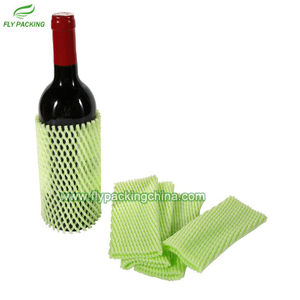
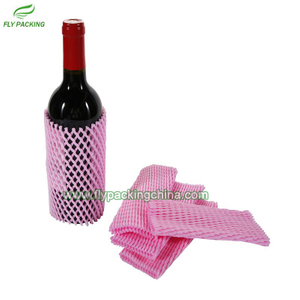
Foam sheets and cushions | Bottles, glass, fragile goods | Impact dampening during stacking | Flat sheets |
Sourcing packaging materials from overseas introduces questions around consistency, lead time, and communication. A few checkpoints worth confirming with any manufacturer:
Response time: How quickly does the supplier answer inquiries, and in what language?
Delivery reliability: Can they confirm stable, trackable shipping schedules?
Export experience: Have they handled door-to-door logistics for international buyers before?
Packing efficiency: Do they offer methods that maximize container loading to lower shipping costs per unit?
Samples: Will they provide free samples before a buyer commits to a bulk order?
Fly Packing Co., Limited, for example, states it replies to English-language inquiries within 12 hours and offers free samples, which gives new buyers a low-risk way to test material quality before placing a full order.
Choosing between foam fruit netting, a fresh fruit foam net, and Continuous Foam Mesh comes down to fruit type, packing volume, and how automated the packing line is. Thin-skinned fruit benefits most from lightweight netting that absorbs shock without adding bulk. Heavier produce holds up better in double-layer nets built for extra cushioning. High-volume operations, meanwhile, tend to favor rolled mesh formats that cut down on waste and simplify storage.
In short: match the material to the fruit's fragility and the packing line's speed, and the right protective solution becomes obvious. Buyers evaluating suppliers should also weigh response time, sample availability, and export experience alongside the material specs themselves, since a reliable supply chain matters just as much as the packaging itself.
How much does protective foam netting typically cost?
Pricing varies based on material thickness, roll length, and order volume. Most suppliers offer tiered pricing for bulk orders, so buyers should request a quote based on their specific fruit type and packing volume.
How long does it take to receive a sample order?
Lead times depend on the supplier's location and shipping method, but many manufacturers offering free samples can dispatch them within a few business days of a confirmed inquiry.
What are the risks of choosing the wrong net size?
A net that's too loose won't cushion the fruit properly, while one that's too tight can press into the skin and cause its own bruising. Matching net size to fruit diameter is essential for full protection.
Are there alternatives to foam netting for fruit protection?
Yes. Foam sheets, foam cushions, and protective paper bags are common alternatives, often used for bottled goods, glass items, or fruit varieties that need a fully enclosed wrap rather than an open mesh.
Who typically needs this type of packaging?
Growers, exporters, packhouses, and distributors handling fresh produce for long-distance shipping are the primary users, particularly those exporting fruit internationally where transit times are longer and handling is less predictable.

| | 1/F, NO.81, CHANGZHEN ROAD, SHUIKOU TOWN, KAIPING CITY, GUANGDONG, CHINA |
| | +86-0-136 3183 6942 / +86-0-134 2677 9895 +86-750-2280358 |
| |