
Every piece of fruit that leaves a farm faces a journey it was never built for. Trucks jolt over uneven roads, pallets shift inside shipping containers, and temperature swings stress delicate skins long before a mango or a bottle of wine reaches a store shelf. A single bruise, crack, or scuff can tu

Fresh produce travels a long road before it reaches a grocery shelf or a dinner table. Along the way, bruising, compression, and surface scratches can turn a perfectly ripe piece of fruit into something no shopper wants to pick up. For growers, packers, and exporters, the margin between a saleable c

Fresh produce travels thousands of miles before it reaches a dinner table, and every mile adds risk. A single bruise on a mango or a hairline crack in a wine bottle can turn a profitable shipment into a loss. Packers, exporters, and growers have spent decades looking for materials that absorb shock

Mangoes are among the most bruise-prone fruits moved through global supply chains. Their thin skin and soft flesh mean even a light knock during loading or transport can leave a mark that shows up days later at the retail shelf. For growers and exporters, that kind of damage translates directly into

Bottles break for one simple reason: they move when they shouldn't. A wine bottle knocking against a crate wall, a glass jar rubbing its neighbor, a shipment jostled by hours of highway vibration—these small motions compound into cracks, scratches, and shattered stock by the time a package reaches i

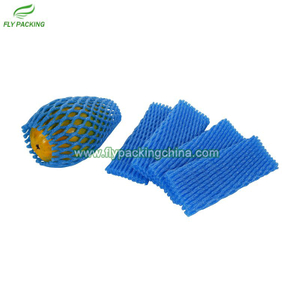
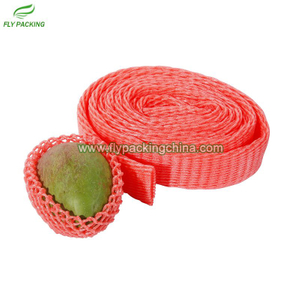
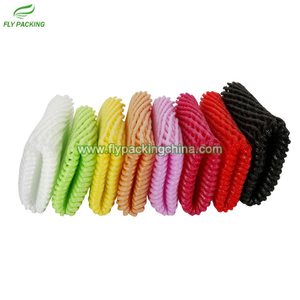
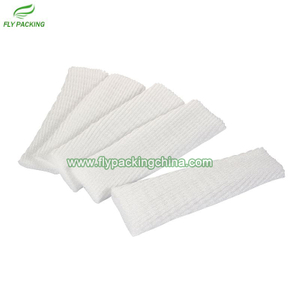
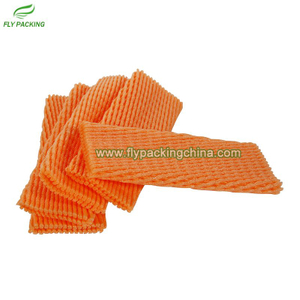
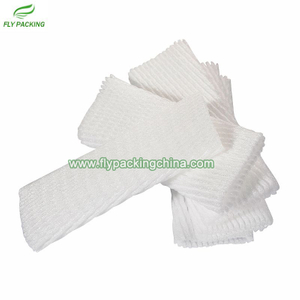
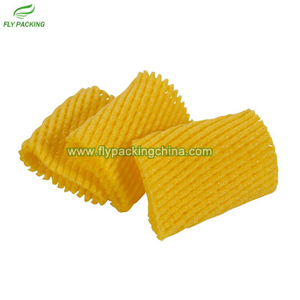
Foam nets protect fresh produce from bruising, scratching, and impact damage during transit. Single-layer options suit lighter fruits, while double-layer designs add extra cushioning for heavier or more delicate produce. Sourcing from a specialized manufacturer ensures consistent quality, reliable s

Long-distance freight puts constant pressure on delicate cargo. Vibration, stacking loads, and shifting weight cause most damage—not dramatic accidents, but slow, grinding contact over hundreds of miles. For growers, packers, and exporters, that damage eats directly into profit margins.Foam mesh sle

Bottles break for one simple reason: they move when they shouldn't. A wine bottle knocking against a crate wall, a glass jar rubbing its neighbor, a perfume flacon vibrating loose during a long haul—these small motions add up to cracks, scratches, and shattered goods by the time a package arrives.Fo
Views: 10 Author: Site Editor Publish Time: 2023-02-17 Origin: Site
Foam net is a popular and environmentally friendly packaging material for fruits. It protects fruits during transportation and helps to extend their shelf life. It is non-toxic and biodegradable, and does not release toxic gases during transportation. It also ensures the freshness of the fruit and prevents it from getting spoiled.
Japanese foaming net is an essential ingredient in your cleansing routine, as it creates a rich, micro-bubbled foam that can gently cleanse the skin. It also helps to stretch the life of your cleanser and allow it to be more effective, so you can get more use out of it.
The secret of creating a dense, fluffy foam is to place the net under water for a while and rub it in a circular motion with a little bit of foaming cleanser. Once it becomes fluffy and dense, you can extract it to use on your face.
A double net is perfect for creating a fine, dense foam that's gentle on your skin. It's easy to use, and the nets don't take up much space in your vanity bag.
A new type of cellulose fibrous network has been obtained by using a combination of wood and hemp fibers with different dimensions and flexibilities. These fibers can be bonded to each other via water induced hydrogen bonds and chemical bonds, and this has a direct influence on their strength properties in the foam forming process.
Foam fruit net is a kind of packaging material used to protect the freshness and quality of fruits. This net prevents fruit from bruising and helps extend the shelf life of fruits. It is non-toxic and biodegradable, and does not release toxic gases during transportation.
The foam fruit net is made from high-foam polyethylene (EPE) that is extruded at a high temperature to produce a mesh sleeve. It is then added to two kinds of auxiliary materials: industrial or medical grade ultra-fine talc powder and food-grade anti-shrinkage agent.
There are many uses for foam fruit nets. For one, they can be placed on the foot of a chair to prevent it from slipping. This is useful especially if the wood in your chair is very slippery and causes the cushion to slip off every time you sit down.
They can also be placed on the table to help insulate the table from hot food. This can be useful if you have a wooden dining table and you don't want to damage it with your plates of piping hot food!
Another surprising use for foam fruit wrappers is to absorb dirt and oils from your dishes. This can help to reduce the amount of cleaning products you need to buy.
It is a great way to cut down on waste and keep things tidy. So next time you are at the market and see the spongy Styrofoam netting that is wrapped around apples, why not pick it up and save it for a few uses?
Polyethylene foam nets are an ideal material for packaging fragile products and can be used for a variety of applications. They are easy to process and fabricate, offer excellent vibration dampening properties, and are durable. They can also be molded to create unique shapes and designs for specific applications.
They can be shaped by compression molding, encapsulation molding, vacuum forming, laminating, skiving and die cutting. All of these processes are done carefully to ensure the finished product meets the needs of the customer.
EPE Foam is an environmentally-friendly material that is CFC-free, odorless, and non-toxic (unless burned). This is especially useful in the construction industry since it can be reused and recycled without producing toxic gases like chlorine.
This type of foam can be used in a number of ways, including in insulation for pipe systems and seals between foundations and sill plates. It can also be used in floatation devices.
In addition, it can be used to create an anti-static barrier. This is helpful in preventing electro-static charges from accumulating, which can harm electronics and equipment.
In this research, we evaluated the mechanical response of low density polyethylene foam-based sandwich panels subject to edgewise compression, using a parametric finite element (FE) model. The buckling behavior of the panels is sensitive to the ratio between facesheet thickness and core thickness, as well as to geometric imperfections included in the laminate. We measured the deformed shape of the panels and compared it with projection moire data.

| | 1/F, NO.81, CHANGZHEN ROAD, SHUIKOU TOWN, KAIPING CITY, GUANGDONG, CHINA |
| | +86-0-136 3183 6942 / +86-0-134 2677 9895 +86-750-2280358 |
| |